



Peptide Dosage Calculator: How to Calculate Peptide Dosages Safely and Accurately
What Is a Peptide Dosage Calculator?
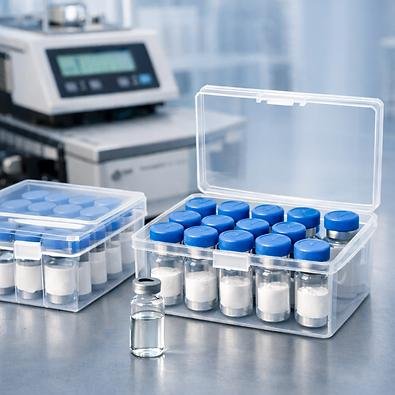
A peptide dosage calculator is a tool designed to help healthcare professionals, researchers, and other qualified users perform mathematical calculations when preparing peptide solutions. These calculators typically use information such as the amount of peptide in a vial, the volume of diluent added, and the desired dose to estimate the volume required for administration.
It is important to understand that a dosage calculator performs mathematical conversions only. It does not determine whether a peptide is appropriate for a particular individual, nor does it recommend a safe or effective dose.
Why Accurate Calculations Matter
Accurate calculations are an important part of medication preparation and research protocols. Errors in concentration or measurement can lead to inaccurate dosing, which may affect research outcomes or patient safety.
Using a calculator can help reduce arithmetic mistakes by converting between units such as:
- Milligrams (mg)
- Micrograms (mcg)
- Millilitres (mL)
- International units (when applicable)
However, users should always verify calculations independently and follow established protocols.
Information Commonly Required
Most peptide dosage calculators require several basic inputs before performing a calculation, including:
- The total quantity of peptide in the vial
- The volume of diluent added
- The resulting concentration
- The intended dose
- The desired administration volume
These inputs allow the calculator to estimate the corresponding volume based on the concentration of the prepared solution.
Understanding Concentration
Concentration refers to the amount of peptide dissolved in a specific volume of liquid.
For example, if a vial contains a known quantity of peptide and a measured amount of diluent is added, the resulting solution has a predictable concentration. From this concentration, the required volume for a given dose can be calculated mathematically.
Understanding concentration is essential for interpreting any dosage calculation accurately.
Limitations of Dosage Calculators
While dosage calculators can simplify mathematical conversions, they have important limitations.
A calculator cannot:
- Recommend an appropriate dose
- Replace professional medical judgement
- Assess whether a peptide is suitable for an individual
- Evaluate potential drug interactions
- Consider medical history or health conditions
These decisions require qualified clinical expertise.
Safety Considerations
Many peptides are prescription medicines, investigational compounds, or research chemicals. Their legal status, approved uses, and safety profiles vary considerably between countries.
Anyone working with peptides should:
- Follow applicable laws and regulations
- Use products from reputable sources where permitted
- Follow manufacturer or research protocols
- Maintain appropriate storage conditions
- Verify calculations before preparation or administration
Individuals should never self-prescribe peptides without guidance from a qualified healthcare professional.
Frequently Asked Questions
Can a peptide dosage calculator tell me how much peptide to take?
No. A dosage calculator performs mathematical conversions only. It does not provide dosing recommendations or medical advice.
Is every peptide calculated the same way?
The underlying mathematics of concentration is similar, but preparation methods, approved uses, and dosing protocols differ depending on the specific peptide.
Can beginners rely entirely on a dosage calculator?
No. Calculators should be viewed as calculation aids rather than substitutes for training, professional guidance, or established protocols.
Final Thoughts
A peptide dosage calculator can be a useful tool for performing concentration and volume calculations, helping users reduce arithmetic errors and improve consistency. However, it should always be used alongside appropriate professional judgement, established preparation procedures, and applicable regulatory requirements.
Whether peptides are used in clinical settings or legitimate research, accurate calculations are only one part of responsible practice. Understanding concentration, verifying inputs, and following qualified medical or research guidance remain essential for safe and appropriate use.