



Can You Take Sermorelin and Tesamorelin Peptides Together? Benefits, Differences, and What You Should Know
Introduction
Sermorelin and Tesamorelin are two well-known growth hormone-releasing hormone (GHRH) peptide analogs that have attracted significant attention in medical research and clinical practice. Because both peptides stimulate the body’s natural release of growth hormone, many people ask the same question: Can you take Sermorelin and Tesamorelin together?
The answer is not straightforward. While both peptides act on similar biological pathways, using them together is a decision that should only be made by a qualified healthcare professional. Understanding how each peptide works, their approved uses, and their potential benefits can help you have an informed discussion with your healthcare provider.
What Is Sermorelin?
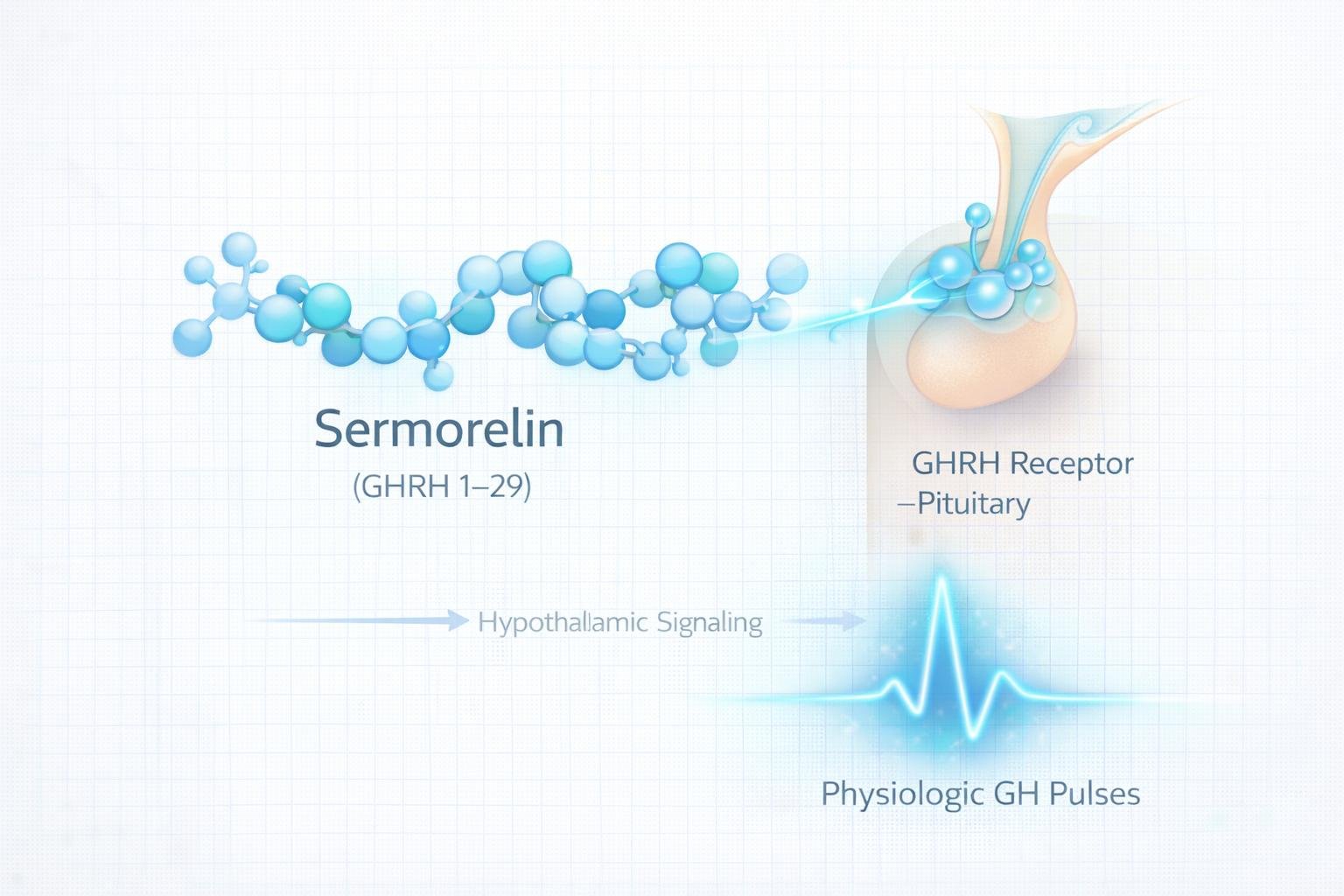
Sermorelin is a synthetic peptide that mimics the body’s natural Growth Hormone-Releasing Hormone (GHRH). It stimulates the pituitary gland to release growth hormone in a way that follows the body’s normal physiological patterns.
Healthcare providers may prescribe Sermorelin in specific situations where growth hormone stimulation is appropriate. Researchers continue to study its effects on hormone regulation, metabolism, and healthy aging.
What Is Tesamorelin?
Tesamorelin is a modified GHRH analog designed to provide greater stability and a longer duration of action than natural GHRH. It is approved in certain countries for specific medical indications, including reducing excess abdominal fat associated with HIV-related lipodystrophy.
Scientists continue to investigate Tesamorelin’s effects on metabolism, body composition, and endocrine function through ongoing clinical research.
Can Sermorelin and Tesamorelin Be Taken Together?
Although Sermorelin and Tesamorelin both stimulate growth hormone release, they target the same physiological pathway. Because of this overlap, combining these peptides is not considered standard therapy, and there is limited clinical evidence supporting routine use of both together.
Whether a combination is appropriate depends on factors such as:
- Individual medical history
- Current medications
- Treatment goals
- Hormone levels
- Overall health status
- Professional medical evaluation
Only a licensed healthcare provider can determine whether combining these therapies is appropriate for a specific patient.
Sermorelin vs. Tesamorelin: Key Differences
While the two peptides belong to the same therapeutic class, they have several important distinctions.
Sermorelin
- Mimics natural GHRH
- Stimulates physiological growth hormone release
- Shorter duration of action
- Commonly discussed in hormone optimization and endocrine care
Tesamorelin
- Modified GHRH analog with enhanced stability
- Longer-lasting biological activity
- Approved for specific medical indications in certain regions
- Frequently studied for metabolic health and body composition
Understanding these differences helps explain why one therapy may be selected over another depending on the clinical situation.
Potential Benefits Under Medical Supervision
When prescribed appropriately, growth hormone-releasing peptides may be used for approved medical purposes and are being studied for additional therapeutic applications. Research continues to explore their effects on:
- Growth hormone secretion
- Body composition
- Metabolic health
- Endocrine function
- Recovery and tissue physiology
- Healthy aging research
It is important to note that potential benefits vary between individuals and depend on the specific medical condition being treated.
Safety Considerations
Like all prescription therapies, Sermorelin and Tesamorelin may cause side effects and are not appropriate for everyone. A healthcare professional may recommend monitoring hormone levels, blood glucose, and other clinical parameters during treatment.
People should never combine prescription peptide therapies without medical guidance, as doing so may increase the risk of unwanted effects or interfere with appropriate treatment planning.
Final Thoughts
Sermorelin and Tesamorelin are innovative peptide therapeutics that stimulate the body’s natural production of growth hormone, but they are not generally used together as routine treatment. Because they work through similar biological mechanisms, combining them should only occur if a qualified healthcare provider determines it is appropriate based on an individual’s medical needs.
If you’re considering peptide therapy, consult an experienced healthcare professional who can evaluate your health, discuss evidence-based treatment options, and recommend the most suitable approach. Making informed decisions with expert guidance is the best way to prioritize both safety and effective care.